

In short,
- Microneedling with radiofrequency stimulates collagen production to improve stretch marks appearance.
- This minimally invasive treatment offers significant improvement with minimal downtime.
- Multiple sessions produce optimal results for various skin types and stretch mark colors.
Understanding Stretch Marks and Treatment Options
Stretch marks affect millions of people, causing frustration and self-consciousness about skin appearance. These linear scars develop when skin stretches rapidly, causing the dermis to tear. While completely harmless from a medical standpoint, stretch marks can significantly impact confidence and how you feel in your own skin.
Microneedling with radiofrequency has emerged as one of the most effective treatments for improving stretch mark appearance. This innovative technology combines two proven skin rejuvenation methods, delivering impressive results that were previously difficult to achieve without invasive procedures.
What Causes Stretch Marks?
Stretch marks, medically known as striae, form when skin experiences rapid stretching that exceeds its elastic capacity. The middle layer of skin, called the dermis, contains collagen and elastin fibers that provide structure and elasticity. When these fibers tear due to excessive stretching, stretch marks appear on the skin surface.
Common causes include pregnancy, rapid weight gain or loss, growth spurts during adolescence, bodybuilding or rapid muscle growth, and prolonged corticosteroid use. Genetics also plays a significant role, as some individuals are more predisposed to developing stretch marks than others.
Initially, stretch marks appear red, purple, or dark brown, depending on your skin tone. These are called striae rubrae. Over time, they fade to white or silver, becoming striae albae. This color change indicates the stretch marks have matured, and the blood vessels beneath the scar tissue have narrowed.
Traditional Stretch Mark Treatment Limitations
Historically, stretch mark treatment options provided limited results. Topical creams and oils may help with skin hydration, but cannot repair the structural damage within the dermis. While these products are safe and inexpensive, they rarely produce noticeable improvement in stretch mark appearance.
Laser treatments, including CO2 fractional laser for stretch marks, have shown more promising results. These treatments create controlled damage to stimulate collagen production. However, traditional ablative lasers carry higher risks of side effects, longer recovery times, and may not be suitable for all skin types.
How Radiofrequency Microneedling Works
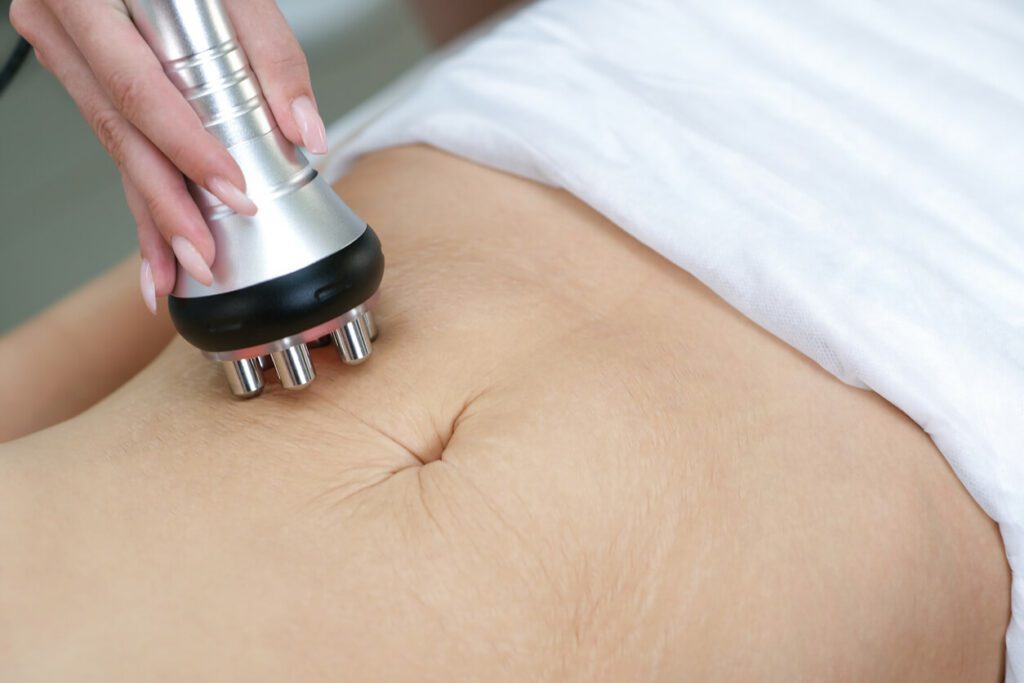
Radiofrequency microneedling combines mechanical needling with thermal energy to address stretch marks at multiple levels. During treatment, ultra-fine needles create microscopic channels in the skin while simultaneously delivering radiofrequency energy into the dermis.
The needling component triggers the skin’s natural healing response, stimulating new collagen and elastin production. The radiofrequency energy heats the deeper layers of skin, causing additional collagen remodeling and tightening.
This dual-action approach provides more comprehensive results than either technology alone.
The controlled injury created by the needles breaks down old scar tissue within stretch marks while promoting the formation of new, healthy tissue. Over time, this process improves texture, reduces the width and depth of stretch marks, and helps blend them more seamlessly with surrounding skin.
Benefits of Microneedling with Radiofrequency for Stretch Marks
Radiofrequency microneedling works effectively on both red and white stretch marks, though newer stretch marks typically respond more favorably. The treatment is suitable for various body areas, including the abdomen, thighs, buttocks, breasts, and arms.
Unlike some laser treatments, radiofrequency microneedling is safe for all skin types and tones. The energy bypasses the skin surface, delivering heat directly to the dermis, which minimizes the risk of hyperpigmentation in darker skin tones.
Downtime is minimal compared to more aggressive treatments. Most patients experience redness and mild swelling for one to three days following treatment. The skin may feel tight or slightly tender, similar to a mild sunburn, but these effects resolve quickly.
What to Expect During Treatment
Your initial consultation involves skin assessment, discussion of your concerns and goals, review of medical history, and development of a personalized treatment plan.
On treatment day, the targeted area is cleansed and a topical numbing cream is applied to ensure comfort. After the numbing agent takes effect, the provider uses the radiofrequency microneedling device across the treatment area in a systematic pattern.
The needles penetrate to a predetermined depth based on your specific needs and the area being treated. Most patients describe the sensation as tolerable pressure with mild warmth. Treatment time varies depending on the size of the area, but typically ranges from 30 to 60 minutes.
Immediately after treatment, the skin appears red and may feel warm. A soothing serum and protective sunscreen are applied. Your provider will give you specific aftercare instructions to optimize healing and results.
Recovery and Aftercare Guidelines
Proper aftercare is essential for achieving optimal results and preventing complications. Keep the treated area clean using gentle, fragrance-free cleansers. Avoid harsh scrubbing or exfoliating products for at least one week.
Apply recommended healing serums or moisturizers to support skin recovery. Hyaluronic acid and growth factor serums can enhance results. Stay well-hydrated by drinking plenty of water to support your skin’s healing process.
Avoid direct sun exposure and apply broad-spectrum sunscreen with at least SPF 30 whenever going outdoors. Sun protection is critical for preventing hyperpigmentation and protecting healing skin.
Refrain from strenuous exercise, hot baths, saunas, or swimming pools for 24 to 48 hours after treatment. These activities can increase inflammation and risk of infection. Avoid makeup on the treated area for at least 24 hours to allow the skin to breathe and heal.
Expected Results and Treatment Timeline
Improvement from radiofrequency microneedling occurs gradually as your body produces new collagen. Most patients notice initial improvements in skin texture within two to four weeks after their first treatment. More significant changes become apparent over the following months as collagen remodeling continues.
Optimal results from radiofrequency microneedling typically require a series of three to six treatments spaced four to six weeks apart. The exact number depends on stretch mark severity, age, location, and individual skin response. Some patients see satisfactory improvement after three sessions, while others benefit from additional treatments.
Results continue improving for up to six months after completing your treatment series as collagen production and remodeling persist. While stretch marks may not disappear completely, most patients experience substantial improvement in their appearance, texture, and color.
Maintenance treatments once or twice yearly can help sustain and enhance results over time. Your provider will recommend a maintenance schedule based on your individual response and goals.
Ideal Candidates for Treatment
Radiofrequency microneedling suits a wide range of patients seeking stretch mark improvement. Ideal candidates are in good overall health, have realistic expectations about treatment outcomes, understand that stretch marks improve but may not disappear completely, and are committed to following pre- and post-treatment instructions.
The treatment works for all skin types and is particularly beneficial for individuals who cannot undergo certain laser treatments due to darker skin tones. Both men and women can achieve excellent results.
Pregnant or breastfeeding women should wait until after completion of nursing to undergo treatment. Individuals with active skin infections, certain autoimmune conditions, or bleeding disorders may not be suitable candidates. A thorough consultation determines whether this treatment is appropriate for your specific situation.
Safety Considerations and Potential Side Effects
Radiofrequency microneedling is generally safe when performed by trained professionals. Common side effects are mild and temporary, including redness and swelling that typically resolve within one to three days, minor bruising in some cases, temporary skin sensitivity, and mild flaking or peeling as skin heals.
Serious complications are rare but can include infection if aftercare instructions are not followed, hyperpigmentation or hypopigmentation in rare cases, and scarring if treatment parameters are inappropriate or healing is compromised. Choosing an experienced provider and following all pre- and post-treatment guidelines minimizes these risks.
Microneedling with Radiofrequency in Dallas, TX
At Privé Aesthetics, we offer advanced microneedling with radiofrequency treatments that deliver real, visible results. Our experienced aesthetic specialists use the latest technology and techniques to help you achieve smoother, more even-toned skin.
Discover how radiofrequency microneedling can transform your stretch marks and enhance your natural beauty.
Call Privé Aesthetics today at (817) 739-6640 or schedule your personalized consultation and learn how we can help you love your skin again.

